 Yemen Science يمن ساينس: الشبكة اليمنية للعلوم والبيئة، موقع يهتم بأخبار العلوم والتكنولوجيا والصحة والبيئة والسكان
مقالات مشابهة

Proposals before the ITU seek to protect civilian communications during conflict. Yemen’s experience shows why those protections matter.
By Abdulrahman Abotaleb
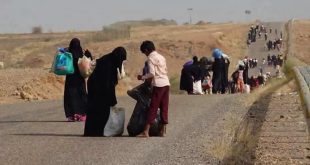
When airstrikes hit a telecommunications building in the Yemeni city of Hodeidah in January 2022, the consequences reached far beyond the city. A widespread internet outage followed, lasting about four days. Aid workers later reported that disrupted communications had delayed urgent humanitarian activities and made it harder to reach colleagues and donors.
That experience gives human weight to proposals submitted to the International Telecommunication Union’s Plenipotentiary Conference (PP-26), taking place in Doha from 9 to 27 November 2026. Texts from Ghana, Iran and Arab States Administrations address the protection of civilian infrastructure, continuity of humanitarian communications and documentation of damage. This analysis examines the proposals as submitted, rather than treating them as adopted decisions.
The proposals are examined in an Internet Society briefing, ITU Plenipotentiary 2026: Summary Issues—Matrix, updated on 2 November 2026. The document maps submissions from governments and regional groups and assesses their potential implications for the Internet. It provides a starting point for this article, which also draws on the original proposals and independent sources to examine what they could mean for civilians in conflict.
One facility, consequences far beyond it
In a report published in 2023, the UN Panel of Experts on Yemen documented Saudi-led coalition airstrikes on a telecommunications building in Hodeidah on the evening of 20 January 2022. Its investigation found that five civilians, including three children, were killed and 20 others injured. Nearby residential buildings were also damaged.
Human Rights Watch, working with Mwatana for Human Rights, documented the wider disruption through interviews, visual evidence and internet monitoring data. It reported a widespread outage from approximately 21 to 25 January. Two aid workers in Taiz and Marib described difficulties communicating with colleagues and donors, delays to projects and disruption of urgent humanitarian work.
Their accounts show how damage to infrastructure can interrupt services far from the site of an attack. They do not measure the outage’s full human cost. The reported deaths and injuries resulted from the airstrikes themselves; these sources provide no estimate of deaths attributable to the loss of connectivity.
Protecting infrastructure, keeping services running
Ghana’s proposal would establish a standing ITU principle recognising civilian telecommunications infrastructure as critical civilian infrastructure, presumed to be a civilian object entitled to protection during armed conflict under applicable international law. “Civilian objects” is the legal term for property and facilities that are not military objectives.
The text explicitly identifies submarine cables, satellite systems, data centres, internet exchange points—where networks exchange traffic—and terrestrial transmission systems. It calls for guidance on protection and recovery, assistance to affected states on request and periodic reporting.
The Arab States proposal, Addendum 39 to Document 91, focuses on public telecommunications networks and services supporting essential humanitarian services during conflicts and disasters. It calls for work on emergency communications challenges, research into resilient networks and steps to maintain service continuity.
It also proposes a dedicated electronic platform through which affected Member States and observers could report damage, destruction and threats to telecommunications infrastructure. Submissions would record the location, nature, extent and impact of incidents. The ITU would compile and analyse the information and produce periodic consolidated reports.
Such a platform could provide a mechanism for documenting harm. Its proposed creation does not establish that reporting would prevent attacks or secure accountability.
Different conditions for protection and reporting
Iran’s proposal, Addendum 3 to Document 82, builds on Ghana’s text but changes some significant wording. It replaces the presumption of civilian status with language affirming protection when infrastructure is used for civilian purposes. It stresses impartial application across states and conflicts, while adding safeguards concerning sovereignty and legitimate security interests.
It would also require the Secretary-General’s reports on the impact of conflicts on infrastructure and connectivity to use verified technical information without identifying parties or Member States. Assessment or verification of damage within an affected state would require that state’s consent.
Iran presents these changes as safeguards for impartiality and the ITU’s technical role. They raise practical questions about how state consent and reports that do not name parties would work alongside useful documentation of harm. The texts alone cannot establish the outcome of those arrangements, or whether they would change existing legal protection.
Civilian networks already have legal protection
The proposals do not create civilian protection from scratch. As the International Committee of the Red Cross explains, international humanitarian law prohibits attacks directed at civilian objects. Telecommunications networks, however, may serve civilian and military users simultaneously.
A facility may become a military objective if, by its nature, location, purpose or use, it effectively contributes to military action, and its destruction, capture or neutralisation offers a definite military advantage in the circumstances at the time.
Even then, the rules on proportionality and precautions continue to apply. Attacks expected to cause incidental civilian harm excessive in relation to the concrete and direct military advantage anticipated are prohibited. All feasible precautions must be taken to avoid or minimise civilian harm.
That assessment, according to the International Committee of the Red Cross (ICRC), must account for reasonably foreseeable indirect effects on civilians who depend on the infrastructure. The legal question therefore extends beyond what happens inside the building to what may stop functioning outside it.
In Hodeidah, the UN panel found no evidence that the coalition had taken all feasible precautions to avoid or minimise civilian harm, and concluded that the principles of precaution and distinction were likely not respected. This was the finding of a UN investigation, not a judicial ruling.
The panel recorded that the coalition had announced strikes in Hodeidah to weaken Houthi capabilities, alleging military use of civilian infrastructure. It had not specifically addressed the telecommunications facility or the civilian losses, and did not reply to the panel’s letters about the incident.
From a principle to a working connection
Both the Ghanaian and Iranian proposals expressly state that they do not create, modify or interpret states’ rights and obligations under international humanitarian law, including the conditions under which an object may lose protection. Their potential contribution lies in directing the ITU’s work on protection, reporting, technical guidance, cooperation and recovery.
They also form part of an existing international discussion. In October 2024, the International Conference of the Red Cross and Red Crescent adopted a resolution addressing the potential human cost of information and communication technology activities during armed conflict.
The practical value of further commitments will depend on the information available, the ability to assess damage, the resources committed and the speed of service restoration. Yemen’s experience shows how a damaged network can disrupt humanitarian work far from an airstrike. For civilians, meaningful protection must ultimately be measured in access to essential services—and in how quickly that access returns when the connection fails.