 Yemen Science يمن ساينس: الشبكة اليمنية للعلوم والبيئة، موقع يهتم بأخبار العلوم والتكنولوجيا والصحة والبيئة والسكان
مقالات مشابهة


By Abdulrahman Abotaleb *
In Al-Haymah Al-Dakhiliyah, west of Sana’a, Lutf Al-Himy recounts a story that echoes across much of Yemen, though here, its contours are especially clear. After years of relying on income sources outside agriculture, he and his family returned to revive fields they had long abandoned, driven by shrinking job opportunities and rising living costs.
Land that was once cultivated only occasionally has now become a primary source of food, even if it does not fully meet their needs.
“We no longer farm to sell; we farm to eat first,” he says, capturing a profound shift in how many families now view agriculture.
Al-Himy’s experience reflects a broader reality: returning to the land is no longer an economic choice but a direct response to a prolonged livelihood crisis.
Across Yemen, people are not returning to farming because they want to, but because they have no other option. Yet this return does not signal recovery; it reveals the depth of economic collapse. In many villages, agriculture no longer represents a seasonal activity or a business venture; it represents today’s meal.

According to the World Bank’s recent Yemen Economic Monitor (Spring 2025), cultivated land expanded between 2018 and 2022 by 10 to 40 percent in some areas. However, this growth does not reflect economic revival. Rather, it signals a forced shift toward agriculture as a survival strategy amid declining employment and collapsing income sources.
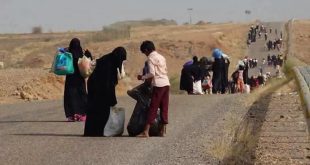
In a country facing one of the world’s most complex humanitarian crises, agriculture has evolved from a productive sector into an informal social safety net. As displacement from cities to rural areas increases, families are turning to the land to secure minimal food and income, particularly as humanitarian aid has declined in recent years.
Yet agriculture’s role today extends far beyond survival.
According to the Food and Agriculture Organization (FAO) of the United Nations in its Yemen Humanitarian Needs and Response Plan 2025, nearly three-quarters of Yemen’s population depend on agriculture for their livelihoods, while less than 1 percent of humanitarian funding to food sectors has supported food production.
This paradox underscores the depth of the crisis; the very sector most Yemenis rely on to survive is the least supported.
The situation is further complicated by Yemen’s near-total dependence on imported staples such as wheat and rice, leaving the country highly vulnerable to global supply disruptions and price shocks.
At the same time, FAO data suggests that even modest agricultural investments can have a transformative impact. A basic crop production package, for example, can enable a family to cultivate up to 1.5 hectares of land and produce around three tonnes of cereals and legumes—enough to sustain them for months and reduce reliance on food aid.
But this fragile “safety net” faces an escalating threat: climate change.
World Bank estimates indicate that nearly half of Yemen’s population is exposed to severe climate risks, including droughts, floods, and extreme heat, while about a quarter face a compounded crisis of poverty, food insecurity, and climate exposure.
In this context, climate shocks do not occur in isolation; they act as force multipliers.
In many farming areas, drought means a completely lost season. Conversely, when heavy rains arrive, they often trigger floods that destroy crops and already fragile infrastructure. Yemen experienced severe flooding in 2024, damaging farmland and killing livestock, further worsening food insecurity in rural communities.
Experts describe this dynamic as the “climate multiplier effect”: climate change does not create crises but intensifies and complicates existing ones. In Yemen, this effect intersects with conflict and economic collapse, forming what can be described as a triple crisis: ongoing conflict, deepening poverty, and climate instability.
These pressures are also reflected in how agriculture itself is structured. While around 70 percent of farmland is used for staple crops, a significant portion is devoted to qat, a water-intensive cash crop that undermines long-term food security. This imbalance highlights a difficult reality: families are often forced to prioritize crops that provide quick income, even at the expense of sustainability.
Despite this bleak picture, some areas offer glimpses of a different trajectory—however limited.
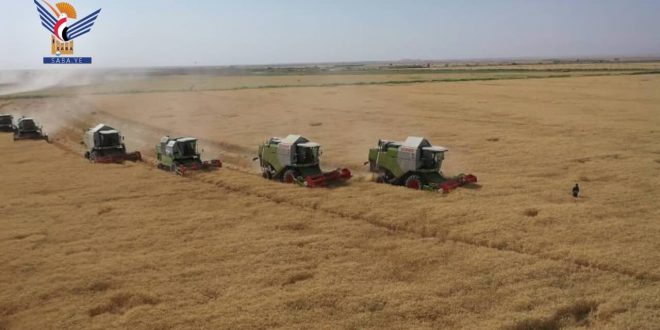
In northeastern Yemen, particularly in Al-Jawf governorate, agriculture is beginning to suggest a path beyond mere survival. In recent years, wheat cultivation has expanded significantly, with increased cultivated areas and improved productivity. Some farms have recorded yields higher than local averages.
This experience has prompted discussions among researchers about the potential to reduce Yemen’s dependence on wheat imports, especially given the fragility of global supply chains. The introduction of technologies such as center-pivot irrigation has contributed to this growth, though it also raises concerns about the sustainability of water use in a country already facing severe water scarcity.
Yet this emerging “agricultural revival” remains constrained by major challenges. Farmers continue to face difficulties in marketing their produce, limited incentives, and the absence of stable agricultural policies. Moreover, this growth remains vulnerable to the same climate risks affecting the rest of the country.
In this sense, Al-Jawf represents a testing ground within Yemen’s broader landscape:
a model of what agriculture could become under the right conditions, and a reminder of how fragile that model remains without them.
That fragility is compounded by projections suggesting that climate change could reduce Yemen’s GDP by up to 3.9 percent annually by 2040 under pessimistic scenarios.
Yet pathways forward do exist.
Both the World Bank and FAO emphasize that investing in agriculture—particularly in water management, drought-resistant seeds, and rural infrastructure—could enhance productivity, strengthen food security, and potentially transform agriculture from a survival mechanism into a driver of economic recovery.
But achieving this requires more than land and rainfall.
It requires stability, policy, and long-term investment.
In Yemen, agriculture is no longer just a means of living—it has become a test of the future.
Can the land save its people… before climate change overtakes it?
* Yemeni science journalist and Editor-in-Chief of Yemen Science Network.