 Yemen Science يمن ساينس: الشبكة اليمنية للعلوم والبيئة، موقع يهتم بأخبار العلوم والتكنولوجيا والصحة والبيئة والسكان
مقالات مشابهة


As Yemen’s urban expansion accelerates and demand for construction materials continues to rise, researchers have identified a promising local resource that could help meet the country’s growing infrastructure needs. A new study suggests that crushed basaltic rock from southern Sana’a possesses the strength, durability, and engineering characteristics required for producing high-quality structural concrete, potentially offering a reliable domestic alternative for the construction sector.
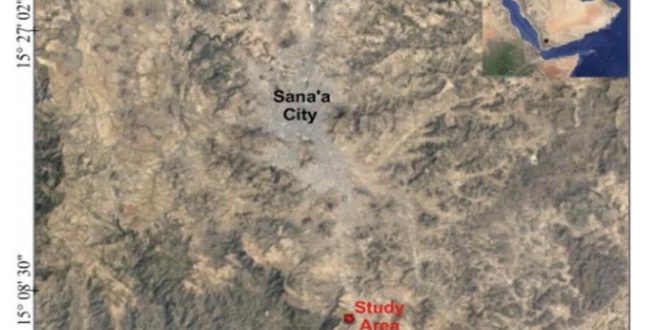
The research, conducted by Ahmed M. Al-Anweh and Ibrahim A. Al-Akhaly of Sana’a University’s Faculty of Petroleum and Natural Resources, represents the first comprehensive engineering assessment of basalt aggregates extracted from the economically important Al-Dar Al-Bayda quarry area south of the Yemeni capital. By combining geological characterization with laboratory testing and concrete performance analysis, the study provides one of the most detailed evaluations to date of a local aggregate source in Yemen.
A Critical Building Material Under Investigation
Aggregates form the backbone of modern concrete, accounting for roughly three-quarters of its total volume. Their physical and mechanical properties play a decisive role in determining the strength, durability, and long-term performance of structures. Despite the widespread use of basalt aggregates across the Sana’a region, little scientific information has been available regarding their engineering quality.
To address this gap, the researchers collected representative samples from one of the region’s major crushing facilities and subjected them to an extensive series of chemical, physical, and mechanical tests in accordance with international standards. The investigation examined everything from particle shape and density to abrasion resistance, water absorption, and long-term durability indicators.
The results revealed a material with exceptionally favorable engineering characteristics. The basalt aggregates exhibited low water absorption, high specific gravity, and excellent resistance to fragmentation and wear. Such properties are generally associated with dense, durable rocks capable of maintaining structural integrity under demanding service conditions.
From Volcanic Rock to Structural Concrete
The team went beyond aggregate testing by evaluating how the material performs inside concrete itself. Concrete specimens were produced using the crushed basalt as coarse aggregate and then tested over curing periods extending to six months.
The findings showed a steady increase in strength as the concrete matured. Compressive strength reached 38.4 megapascals after 28 days of curing and continued to rise to 45.9 megapascals after 180 days. These values place the material comfortably within the range required for many structural engineering applications and demonstrate a sustained development of mechanical performance over time.
According to the researchers, this strength gain reflects the progressive formation of hydration products within the cement matrix. More importantly, the dense nature of the basalt appears to enhance the bond between aggregate particles and cement paste, contributing to efficient load transfer throughout the concrete structure.
The study also estimated the concrete’s modulus of elasticity—a measure of stiffness that is crucial for structural design. Values ranged between approximately 32 and 33 gigapascals, indicating a level of rigidity consistent with high-quality structural concrete used in buildings and infrastructure projects.
The Geological Advantage
The superior performance of the material can be traced back to its geological origins. The investigated basalt belongs to volcanic formations that dominate large areas south of Sana’a. The rock is characterized by a fine-grained crystalline texture, low porosity, and minimal signs of weathering.
These features provide several engineering advantages. Dense mineral interlocking helps prevent the propagation of microcracks, while low porosity limits water penetration and enhances resistance to environmental degradation. The study also found no evidence of characteristics commonly associated with harmful chemical reactions that can compromise concrete durability over time.
In effect, the rock’s geological history appears to have endowed it with precisely the qualities engineers seek in construction aggregates: strength, stability, and resistance to deterioration.
Why the Findings Matter
The implications extend beyond a single quarry site. Yemen possesses extensive volcanic formations, many of which remain poorly characterized from an engineering perspective. Reliable scientific data on local construction materials are essential for ensuring the safety and longevity of buildings, roads, and infrastructure projects.
By demonstrating that basalt from southern Sana’a meets international engineering requirements, the study highlights the potential value of locally sourced materials in supporting future development. Greater reliance on proven domestic resources could reduce transportation costs, improve quality control, and strengthen the sustainability of the construction industry.
The findings are particularly significant given the increasing demand for durable building materials in rapidly growing urban centers. Access to high-performance aggregates can directly influence the quality of concrete structures and their ability to withstand decades of service.
Looking Ahead
While the results are encouraging, the researchers note that their investigation focused on a single production site and a specific concrete mix design. Additional studies across other volcanic formations in Yemen, as well as under different environmental and loading conditions, will be needed to establish a broader understanding of the country’s aggregate resources.
Nevertheless, the study provides compelling evidence that the basalt deposits south of Sana’a represent far more than a convenient source of crushed stone. They may constitute one of Yemen’s most valuable geological assets for the future of sustainable construction, offering a locally available material capable of producing strong, durable, and reliable concrete for generations to come.